
NOTE: Candidates can only use the scholarship to study outside their own country.
MSc in One Health and Disease Modelling
Programme Overview
The programme is administered in partnership with Corona Management Systems (CMS), and is aligned with a 10-month funded Fellowship in disease modelling supported by the Bill and Melinda Gates Foundation (BMGF), the National Malaria Elimination Programme (NMEP), the Nigeria Centre for Disease Control and Prevention (NCDC), and the World Health Organisation (WHO). Participants on the joint Fellowship/MSc route receive both the CMS Fellowship in Malaria Modelling and the University of Port Harcourt master's degree.
The rationale for the programme is grounded in five strategic priorities:
1. Interdisciplinary response — integrating human, animal, and environmental health to address zoonotic diseases, antimicrobial resistance, and environmental health challenges.
2. Building local capacity in disease surveillance, modelling, and prevention to reduce dependency on external expertise.
3. Strengthening health security through predictive modelling and improved outbreak preparedness.
4. Supporting sustainable development by linking health to environmental and agricultural policies.
5. Enhancing global health research and positioning Nigeria as a regional leader in integrated health solutions.
Learning Outcomes
Admission Requirements The programme is open to candidates who possess: • A first degree in medicine, dentistry, or veterinary medicine from a recognised university; OR • A first degree in a health-related field (nursing, pharmacy, laboratory science, allied health, or administration) with at least a Second-Class Honours Degree and a minimum CGPA of 3.00 on a 5-point scale; OR • A first degree in biological sciences (animal or plant) with at least a Second-Class Honours Degree and a minimum CGPA of 3.00 on a 5-point scale; OR • A postgraduate diploma in public health or a related health field with a CGPA of at least 3.50 on a 5-point scale — for candidates from non-health disciplines or with a CGPA below 3.00. Nigerian applicants must also hold an NYSC discharge certificate or exemption. Total credit units: 36 credits.
Course Modules
Contemporary Healthcare (History, Ethics, Rights, Policies, Politics and Law)
Introduction to One Health: Principles and Practice
Application of One Health in Disease Control and Prevention
Environment, Social Medicine and Health Promotion
ICT & Research Methods
Management and Entrepreneurship
Disease Modelling I — Epidemiology Fundamentals
Disease Modelling II — Biostatistics and Quantitative Methods
Disease Modelling III — Advanced Epidemiological Analytics
Internship / Practicum
Seminar
Dissertation
About University of Port Harcourt
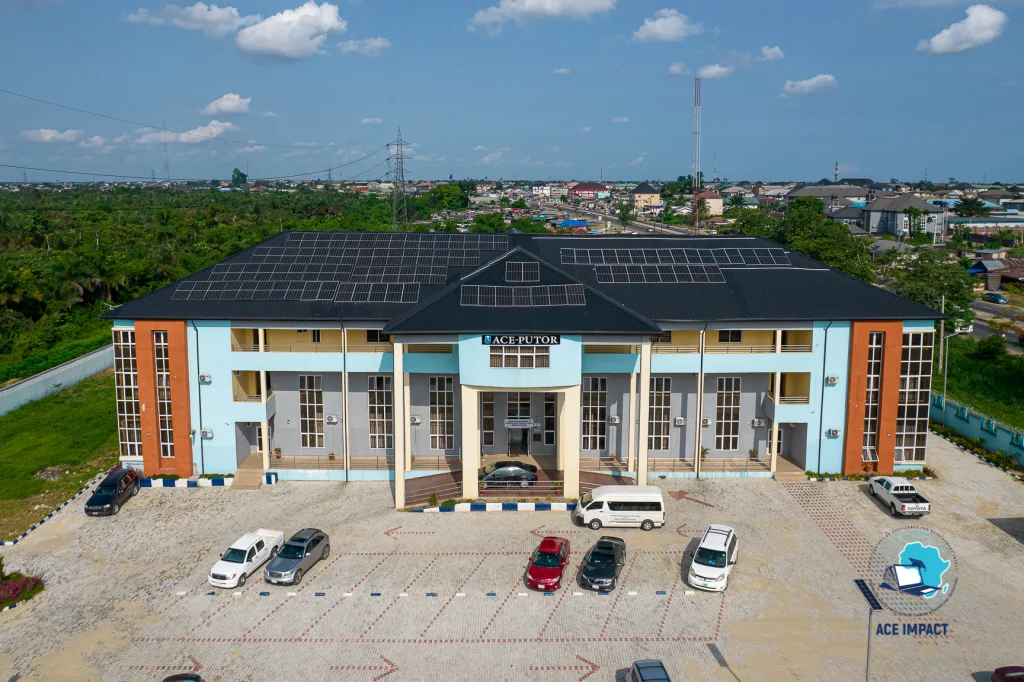
The University of Port Harcourt — popularly known as "Unique UniPort" — is one of Nigeria's avant-garde tertiary institutions with a mandate to empower the Niger Delta region and the country academically. Established in 1975 as a College of the University of Lagos, the university gained full autonomous status in 1977 and is located about 18 kilometres northwest of Port Harcourt — Nigeria's Garden City, home to the country's second largest seaport and the hub of the petroleum and gas industry. UniPort is uniquely situated at the intersection of West Africa's tropical rainforest and the wetlands, swamps, and mangrove forests of the Niger Delta. Recognised by the National Universities Commission (NUC) and a member of the Association of Commonwealth Universities (ACU), the university offers programmes across the arts, engineering, social sciences, and sciences, and runs effective extension services through specialised research institutes and centres. As of 2022, UNIPORT hosts 72 bachelor's, 125 master's-level, and 106 doctoral-level programmes, with a total student population of 33,501, a teaching staff strength of 1,456, and administrative staff of 2,008. The Africa Centre of Excellence in Public Health and Toxicological Research (ACE-PUTOR, www.aceputoruniport.edu.ng) — the EXCEL-PHARM managing centre — is a World Bank-funded regional hub for interdisciplinary postgraduate training and research in public health, toxicology, nutrition, and nursing sciences.
Ready to Apply?
Applications for the 2026/2027 intake have closed. Details of future calls will be announced on this website.
How to Apply