

University of Port Harcourt
About the Institution
Our Mission
VISION To be among the best entrepreneurial universities in the world, renowned for teaching, research, innovation, creativity, productivity, scholarship, and entrepreneurship. MISSION The pursuit of academic excellence, the advancement of knowledge and services through quality teaching, lifelong learning, social inclusion, strengthening of civil society, and policy-relevant research that addresses the challenges of contemporary society. PHILOSOPHY Committed to academic freedom, ethics and integrity, tolerance, probity, equal opportunity, producing competent graduates, and respect for cultural diversity. ACE-PUTOR MISSION To provide an enabling environment for students and faculty to discover and nurture their full potentials in delivering innovative research and human capacity development.
Facilities & Resources
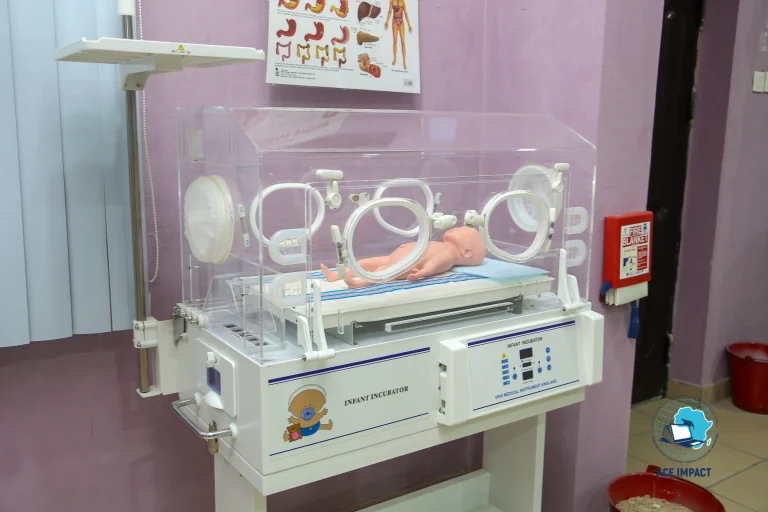
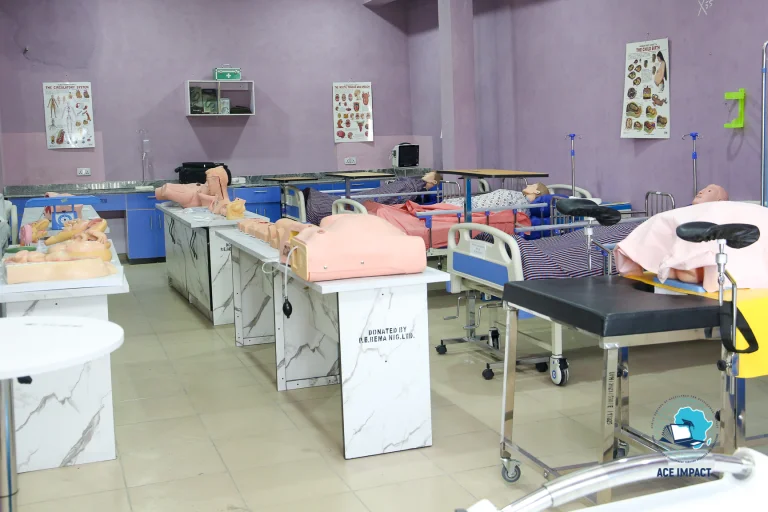
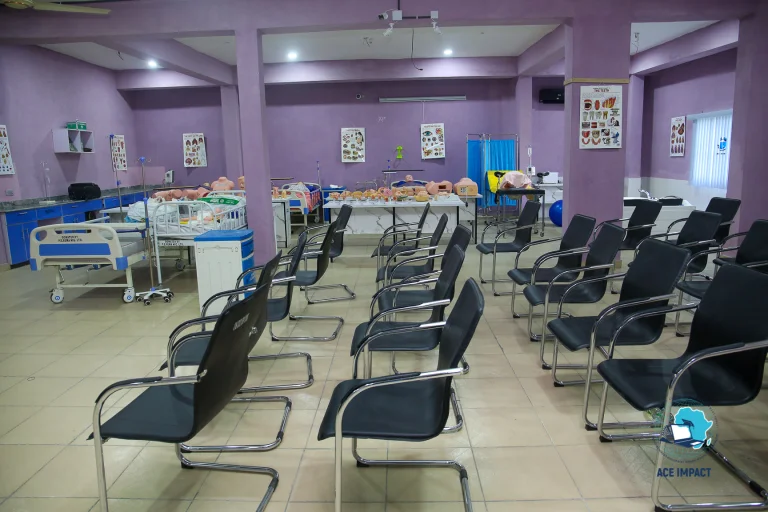
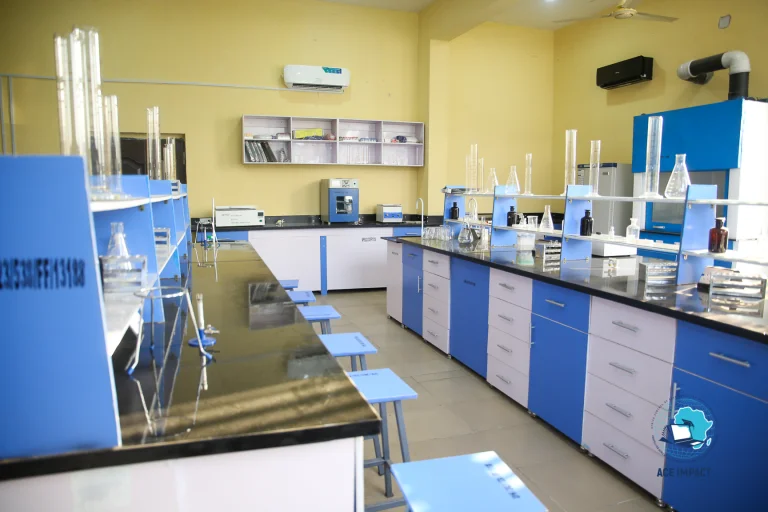
ACE-PUTOR operates from a purpose-built 3-floor facility commissioned in October 2023, located beside Unique Luxury Hotel & Suite on the University of Port Harcourt campus. The building hosts:
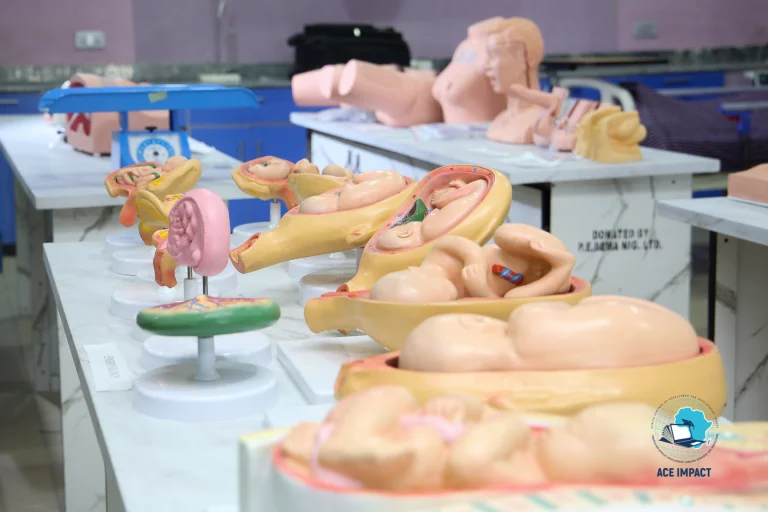
• 5 smart classrooms (including 42, 72, and 102-seater classrooms, a conference room, and a video-conferencing room) • 6 specialist laboratories: Biochemistry/Toxicology, Nursing Skills, Public Health Skills, Digital Skills, Clinical Simulation, and Incubation/Testing & Prototyping • 1 doctoral hub, 1 seminar room, and 1 board room • 15 furnished staff offices and 3 project offices • 3 reception areas, library, bookshop, and reading commons • Animal house and multipurpose building with incubation centre and 24-room guest house • Language laboratory for training non-English students • E-library and uninterrupted power supply
Additional facilities available for training and research:
• Clinical facilities at the University of Port Harcourt Teaching Hospital • Out-patient clinics for STD/HIV, growth monitoring, well-person, occupational health, family health, family planning, endemic diseases, and immunoprophylaxis • Facility for urban community health programmes at Aluu Health Centre • Facility for rural community health programmes at Kegbara Dere, Gokana LGA • Facility for the management of Drug-Resistant Tuberculosis



Student support services
Every EXCEL-PHARM scholarship holder arriving at this institution receives the same core support, arranged through the institutional coordinator: welcome and orientation on arrival; accommodation, either in a university residence or in assisted private housing; help with visa applications where these are needed; residence registration and any other registration the country or the institution requires; language support where the language of instruction is not your own; and campus health services.
The international office is open to scholarship holders for any other support they need. Your institutional coordinator is your first point of contact for all of it.
Facilities for people with special needs
This institution ensures access to its buildings, residences, teaching rooms and laboratories for persons with special needs.
Contact the EXCEL-PHARM institutional coordinator, or the consortium coordinator, to arrange any individual adjustment you need. Raise it before you accept a placement, so that the arrangements are in place on the day you arrive.
International Collaborations & Achievements
ACE-PUTOR (www.aceputoruniport.edu.ng) was established under the World Bank-funded African Centres of Excellence IMPACT Project (ACE IMPACT), which aims to build regional capacity for high-quality postgraduate courses and high-impact applied research focused on sub-Saharan Africa. Under the leadership of Prof. Daprim Ogaji, ACE-PUTOR achieved all its disbursement-linked results ahead of project closure, earning multiple accolades from the African Centre of Excellence network.
The Centre has successfully developed and launched 12 taught master's degree programmes, 11 PhD programmes, and 3 postgraduate diploma programmes in public health and related disciplines — one of the most comprehensive postgraduate programme suites among ACE IMPACT institutions.
The ACE-PUTOR facility — a dedicated 3-floor building commissioned on 13 October 2023 — stands as one of the most modern public health training facilities in Nigeria, housing 5 smart classrooms, 6 specialist laboratories, a doctoral hub, video-conferencing room, and a 24-room guest house.
UNIPORT-ACE-PUTOR collaborates with Corona Management Systems (CMS) and the Bill & Melinda Gates Foundation-funded fellowship programme, offering a joint MSc/Fellowship pathway in disease modelling in partnership with the National Malaria Elimination Programme (NMEP), Nigeria Centre for Disease Control and Prevention (NCDC), and the World Health Organisation (WHO).
Professor Ogaji serves as Editor-in-Chief of The Nigeria Health Journal (www.tnhjph.com), indexed in Scopus and EBSCO, and chairs the Rivers State Hospitals' Management Board and the Clinical Governance Committee of the University of Port Harcourt Teaching Hospital.

Our Team
1 member
Available Mobilities
3 mobilities
MSc in One Health and Disease Modelling
The MSc in One Health and Disease Modelling is a postgraduate programme offered through the Africa Centre of Excellence in Public Health and Toxicological Research (ACE-PUTOR) at the University of Port Harcourt. Designed to equip an interdisciplinary team of health professionals with the knowledge and tools to address complex emerging disease challenges, the programme emphasises the interconnectedness of human, animal, and environmental health through a trans-disciplinary One Health approach. The programme is administered in partnership with Corona Management Systems (CMS), and is aligned with a 10-month funded Fellowship in disease modelling supported by the Bill and Melinda Gates Foundation (BMGF), the National Malaria Elimination Programme (NMEP), the Nigeria Centre for Disease Control and Prevention (NCDC), and the World Health Organisation (WHO). Participants on the joint Fellowship/MSc route receive both the CMS Fellowship in Malaria Modelling and the University of Port Harcourt master's degree. The rationale for the programme is grounded in five strategic priorities: 1. Interdisciplinary response — integrating human, animal, and environmental health to address zoonotic diseases, antimicrobial resistance, and environmental health challenges. 2. Building local capacity in disease surveillance, modelling, and prevention to reduce dependency on external expertise. 3. Strengthening health security through predictive modelling and improved outbreak preparedness. 4. Supporting sustainable development by linking health to environmental and agricultural policies. 5. Enhancing global health research and positioning Nigeria as a regional leader in integrated health solutions.

MSc in Healthcare Quality, Leadership and Innovation
The MSc in Healthcare Quality, Leadership and Innovation is offered through the Africa Centre of Excellence in Public Health and Toxicological Research (ACE-PUTOR) at the University of Port Harcourt. The programme is designed to build the skills and capacity for driving excellence in leadership, team management, continuous quality improvement, and patient safety among health professionals and institutions in Nigeria. The programme addresses five key gaps in the Nigerian healthcare system: 1. Improving Healthcare Quality — trains professionals to enhance patient care, reduce medical errors, strengthen clinical governance, and implement evidence-based practices. 2. Leadership Development — equips healthcare workers with management and leadership skills to drive systemic improvements in resource-constrained environments. 3. Fostering Innovation — encourages creative problem-solving and adoption of new technologies to tackle local healthcare challenges. 4. Capacity Building — strengthens the workforce to meet growing demand for skilled healthcare leaders and improve health system resilience. 5. Global Competitiveness — aligns local healthcare systems with global standards, attracting investment and collaboration. The programme targets health practitioners — doctors, nurses, pharmacists, laboratory scientists, administrators, and allied health professionals — and focuses on the principles and practice of healthcare quality improvement, patient safety, leadership development, translational science, and innovation.

MSc in Pharmaceutical & Medicinal Chemistry
The MSc in Pharmaceutical and Medicinal Chemistry at the University of Port Harcourt equips students with advanced theoretical, conceptual, and technical knowledge in pharmaceutical and medicinal chemistry. The programme aims to: i. Equip students with the knowledge base in pharmaceutical and medicinal chemistry. ii. Develop skills and competencies applicable to the field. iii. Produce high-calibre professionals who will play leading roles in pharmaceutical and allied industries — particularly in drug discovery and development (DDD), drug quality control and assurance (DQCA), and drug efficacy and action. iv. Provide advanced knowledge and skills to meet national and international manpower needs in pharmaceutical education and research. In the first year, students cover advanced organic chemistry, medicinal chemistry, chemistry of natural products, modern analytical techniques, advanced pharmacokinetics and metabolic chemistry, pharmaceutical analysis and quality evaluation, and drug design and synthesis. Special emphasis is placed on drug discovery from medicinal plants targeting global diseases such as malaria, hypertension, diabetes, and microbacterial and inflammatory diseases. ICT, biostatistics, entrepreneurship, and research methods are also integrated. Teaching is delivered through problem-based learning, interactive lectures, laboratory practicals, self-directed learning, and seminar presentations. In the second year, students conduct supervised research on approved topics in pharmaceutical and medicinal chemistry, culminating in a thesis examined internally, externally, and through an oral examination.
Latest News
3 articles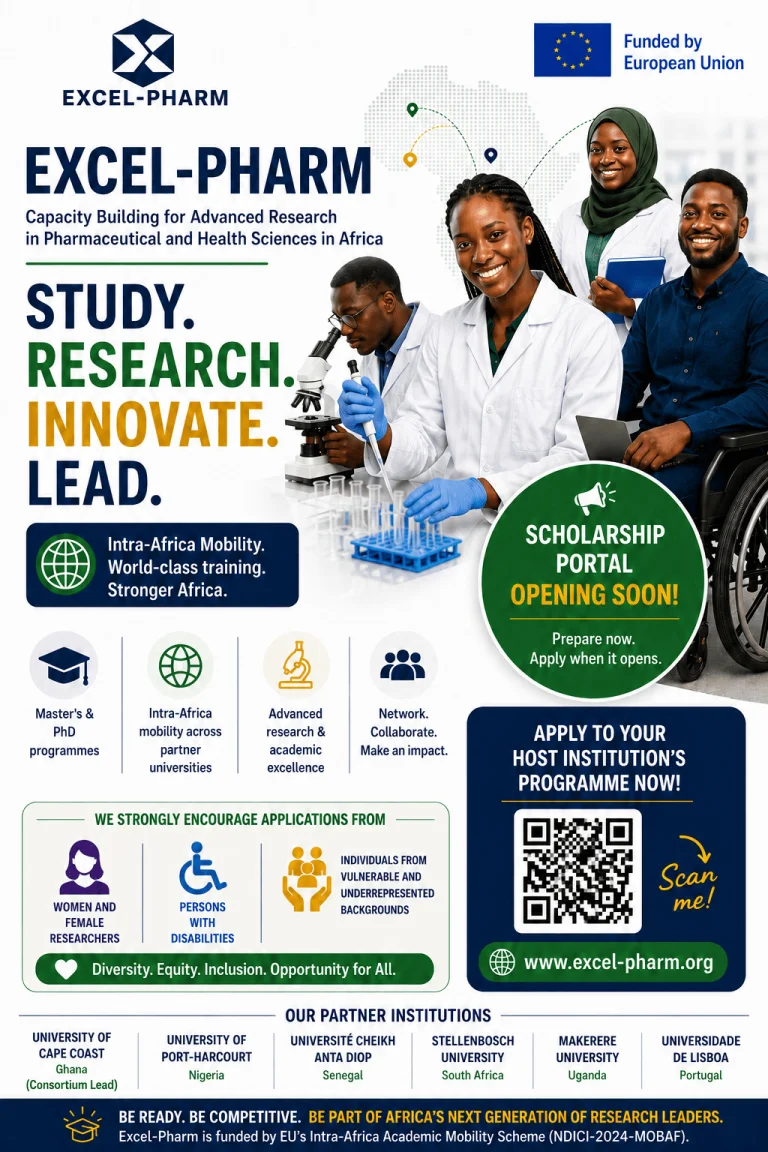
Study, Research, Innovate, Lead: EXCEL-PHARM opportunities open across Africa
The EXCEL-PHARM consortium invites the next generation of researchers to study, research, innovate, and lead. The scholarship portal is now open — degree-seeking Master's and PhD applications for the 2026/2027 intake are being accepted, with a deadline of 15 August 2026.

Intra-Africa Academic Mobility Kick-Off and Green Transition Cluster Meeting
EXCEL-PHARM team members attended the EU-organised Kick-off meeting for new Intra-Africa Mobility Projects and the Cluster meeting on Green Transition, held in Brussels from 14 to 17 April 2026.
EU-Funded EXCEL-PHARM Project Launched
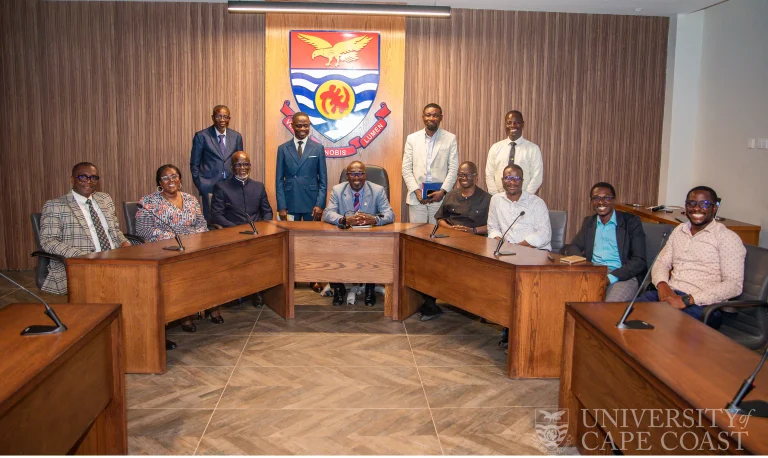
The Erasmus+ funded EXCEL-PHARM project was officially launched in a two-day inception meeting hosted by the University of Cape Coast, bringing together six partner institutions from Africa and Europe to enhance postgraduate pharmaceutical and health sciences education.
Quick Facts
- Abbreviation
- UPH
- Country
- Nigeria
- Region
- West Africa
- Mobilities
- 3
- Team
- 1 members
Contact
-
www.uniport.edu.ng
-
daprim.ogaji@uniport.edu.ng
-
+234 803 709 2225
-
Africa Centre of Excellence in Public Health & Toxicological Research (ACE-PUTOR), Beside Unique Luxury Hotel & Suite, University of Port Harcourt, East-West Road, Choba, Rivers State, Nigeria
Interested in a mobility?
Applications for the current intake have closed. Future calls will be announced on this website.
Learn MorePhoto Gallery